
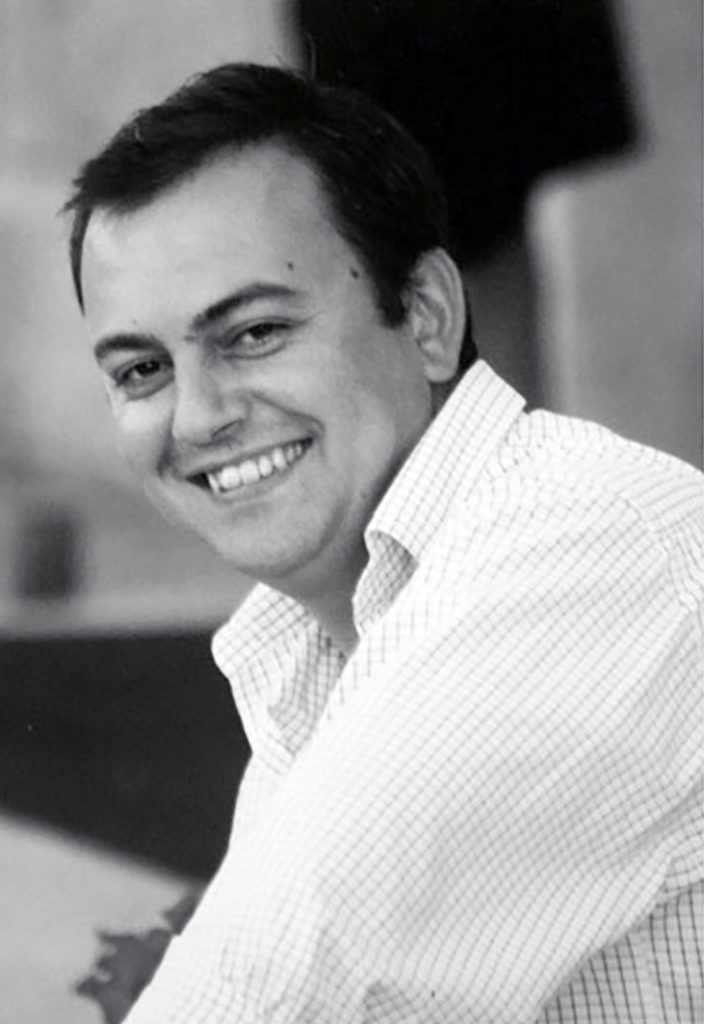
João Cabral
Collaborator Member
Profile
About
João Carlos da Fonseca Cabral is a higher education lecturer, researcher and professional in the fields of audiovisuals, multimedia and digital arts. He holds a Specialisation in Audiovisuals and Media Production (CNAEF 213), a Master’s degree in Digital Arts from the University of Minho, and has a background in Communication and Audiovisual Technologies from the Polytechnic Institute of Porto.
He currently holds the post of Visiting Lecturer at the School of Applied Arts of the Castelo Branco Polytechnic Institute and at the School of Education of the Santarém Polytechnic Institute. His teaching covers areas such as audiovisual studies, photography, multimedia, web design, digital arts, audiovisual production and post-production, digital communication and interactive technologies.
Alongside his teaching, he works in the audiovisual and media sector, having collaborated with various organisations and projects, including work in television, audiovisual production, photography and multimedia communication. He is also the author of *The Audiovisual Handbook – For Students & Professionals*, published in 2022.
His research and artistic practice have focused in particular on augmented reality, interaction, immersion, interface design, video mapping, motion design, sound design, audiovisual storytelling, photography and documentary filmmaking. He has taken part in international teaching and mobility initiatives, including augmented reality workshops at the Bauhaus-Universität Weimar and the Università degli Studi di Bergamo.
Its programme is thus characterised by the integration of higher education, research, artistic creation and professional practice, exploring the relationship between design, audiovisual communication and emerging digital technologies.
Research
Research interests
As a researcher in the fields of Communication Design, Interface Design, Usability and Digital Technologies, I have been engaged in teaching and research activities relating to the critical and inclusive use of digital technologies, particularly in the areas of Augmented Reality and Extended Reality (XR), human-computer interaction, user experience (UX), accessibility and digital literacy.