Apply as Partner of the New European Bauhaus
Click here
Align Act Accelerate
Click here
MUCH MORE THAN A MARKET
Click here to read
Union of Skills

Investing in people for a competitive European Union The European Union needs skilled people to respond to new challenges and stay competitive. But as job requirements change, many workers struggle to keep up and businesses cannot find the right talent. These skills and labour gaps are hindering European competitiveness. That is why the European Commission is introducing the Union of Skills, a plan to improve high quality education, training, and lifelong learning. It aims to deliver higher levels of basic and advanced skills provide opportunities for people to regularly update and learn new skills facilitate recruitment by businesses across the EU attract, develop and retain top talent in Europe The Union of Skills will empower people across the EU with the skills they need to succeed in their educational and professional lives. It will also make it easier to use these skills in different EU countries. By addressing gender imbalances and helping European businesses find the workers they need, it aims to make the EU more competitive and inclusive. Improving education and skills will also ensure that Europe’s social model remains affordable, thanks to its competitive economy. More information
CIAC-PLDIS-IPSantarém is present in several European Platforms. Have a look:
Heinnovate Platform HEInnovate is a self-reflection tool for Higher Education Institutions who wish to explore their innovative potential. It guides you through a process of identification, prioritisation and action planning in eight key areas. The self-assessment is available in all EU languages. EURAXESS – researchers in motion The leading portal for the research community Whether you’re seeking advice on career development, looking for tools to enhance your skills, or need concrete assistance with relocating for your next big opportunity, EURAXESS can help. No matter what stage of your research path or scientific business you are at, EURAXESS is a comprehensive career and innovation hub for information and assistance. Find jobs, hosting and funding opportunities, as well as support and guidance. Open Research Europe Open Research Europe is an open access publishing venue for European Commission-funded researchers across all disciplines, with no author fees. Accelerate the impact of your research with rapid publication, open peer review, and indexing in databases such as Scopus and PubMed. EHESO The European Higher Education Sector Observatory (EHESO) is a user-centred data and information platform on the higher education sector in Europe. The Observatory enables the comparison, analysis, and showcasing of the sector’s performance across multiple levels, actors, and themes.
Université Paris Cité Opens Applications for 2026 Visiting Researchers Program
Université Paris Cité is excited to announce that the application period for its 2026 Visiting Researchers Program is now officially open! This initiative seeks to enhance international partnerships by welcoming researchers from foreign institutions to engage in collaborative projects with UPCité faculty members. Program Highlights Objective: Strengthen research collaborations between Université Paris Cité and international institutions through joint projects. Duration: Up to 15 days (extendable to 45 days with co-funding). Timeline: Research stays can take place between January and July or between September and December of 2026. Funding: Université Paris Cité will cover travel expenses and provide a daily allowance (per diem) for living costs. How to Apply Interested researchers from international institutions must establish contact with a faculty member from Université Paris Cité’s Faculty of Humanities and Social Sciences. Together, they can develop a joint project, which must be submitted by a UPCité faculty member by March 9, 2026, at 4 PM (Paris time). The official call for projects and the application form are available for download on the university’s website. For further information or assistance in connecting with faculty members, please contact internationalization.sh@u-paris.fr.
Interreg Next MED Hosts Info Day and Opens 2nd Call for Green Transition Projects

Lisbon, Portugal – The Interreg Next MED cooperation program is set to host a National Info Day as part of the #GREENMED TOUR on February 20, from 9:30 AM to 5:30 PM. The event will take place at the Biblioteca dos Fundos of the Agency for Development and Cohesion (Lisbon) and will focus on the newly launched Call for Projects dedicated to the Green Transition. This initiative aims to support a more sustainable and climate-resilient Mediterranean region. 2nd Call for Projects Now Open The 2nd Call for Projects is officially open for applications until April 15, 2025, at 12:00 PM (Continental Portugal time). A wide range of entities are eligible to apply, including: Local, regional, and national public authorities Universities and research centers Civil society organizations Small and medium-sized enterprises (SMEs) with innovative solutions in the green economy sector This initiative presents a valuable opportunity for stakeholders committed to driving sustainable solutions and fostering international cooperation in the Mediterranean region. For more information on the event and the application process, visit the official Interreg Next MED website.
FCT Announces New Open Access Policy for Scientific Publication

The Foundation for Science and Technology (FCT) has launched a new Open Access Policy for scientific publications resulting from FCT-funded research, significantly updating the mechanisms in place since 2014. Effective for funding applications submitted after February 7, 2025, this policy applies to scientific articles, books, book chapters, monographs, doctoral theses, and master’s dissertations. It reinforces the principle that publicly funded research should yield publicly accessible and reusable results, enhancing scientific collaboration, visibility, and progress. Researchers can access detailed guidelines, rights retention strategies, and FAQs online. Additionally, a dedicated support website has been created to assist them throughout the open-access publication process. The policy defines different open-access publishing routes: Gold Route: Immediate open access via journals, books, or publishing platforms. Green Route: Open access through the RCAAP repository network after publication in closed-access formats. Transformative Route: Open access publishing in hybrid journals under transformative agreements. For FCT-funded doctoral theses or master’s dissertations, publication requirements vary based on the awarding institution. Portuguese institutions must deposit theses in an RCAAP repository within 60 days of degree conferral, while authors from foreign institutions are responsible for self-depositing within the same timeframe. A key aspect of this policy is the elimination of embargo periods and mandatory rights retention, ensuring that at least the accepted manuscript version is available in open access. This revision builds on a decade of experience, aligns with global developments in open-access policies from UNESCO and the EU, and reflects FCT’s commitment to the Plan S initiative led by cOAlition S and supported by Science Europe. more information
New European Innovation Agenda: A New Wave of Technology and Social Progress
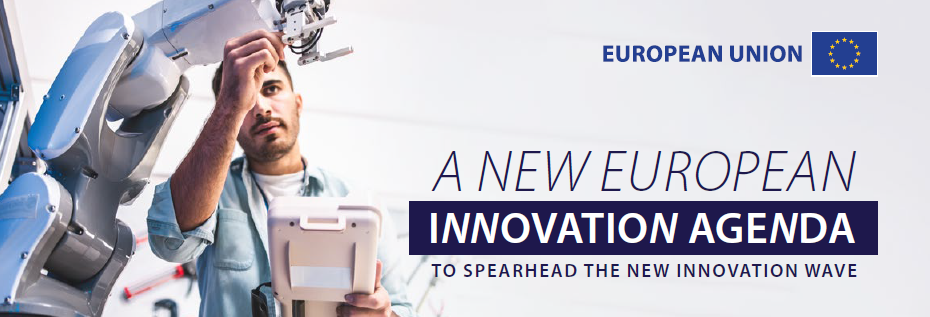
The European Commission has presented the “New European Innovation Agenda”, an ambitious initiative aimed at positioning Europe as a global leader in the next wave of technological innovation. This plan seeks to drive growth and the development of disruptive technologies while addressing crucial social and environmental challenges. The new agenda places a strong emphasis on deep tech innovation, which is essential for finding advanced solutions in the following areas: Reducing greenhouse gas emissions, contributing to the fight against climate change; Promoting sustainable and competitive economies; Advancing European technological sovereignty and enhancing food security; Improving connectivity and social impact, ensuring inclusive innovation across all European regions. Key measures include: Training 1 million professionals in advanced technologies, with a special focus on including women and diversifying the workforce; Creating “regional innovation vouchers” to integrate local players into European innovation ecosystems; Simplifying access to funding for startups and scale-ups through new venture capital mechanisms and reduced bureaucracy. The New European Innovation Agenda also highlights the importance of fostering collaboration between the public and private sectors, encouraging an innovative mindset that inspires the rest of the world. This initiative not only aims to transform Europe into a technological powerhouse but also to ensure that technological progress brings tangible benefits to society, creating solutions that improve citizens’ lives and strengthen the EU’s economic and environmental resilience. More information at: New European Innovation Agenda
Demola Global Workshop: Competence and Culture for Innovation and Future Society
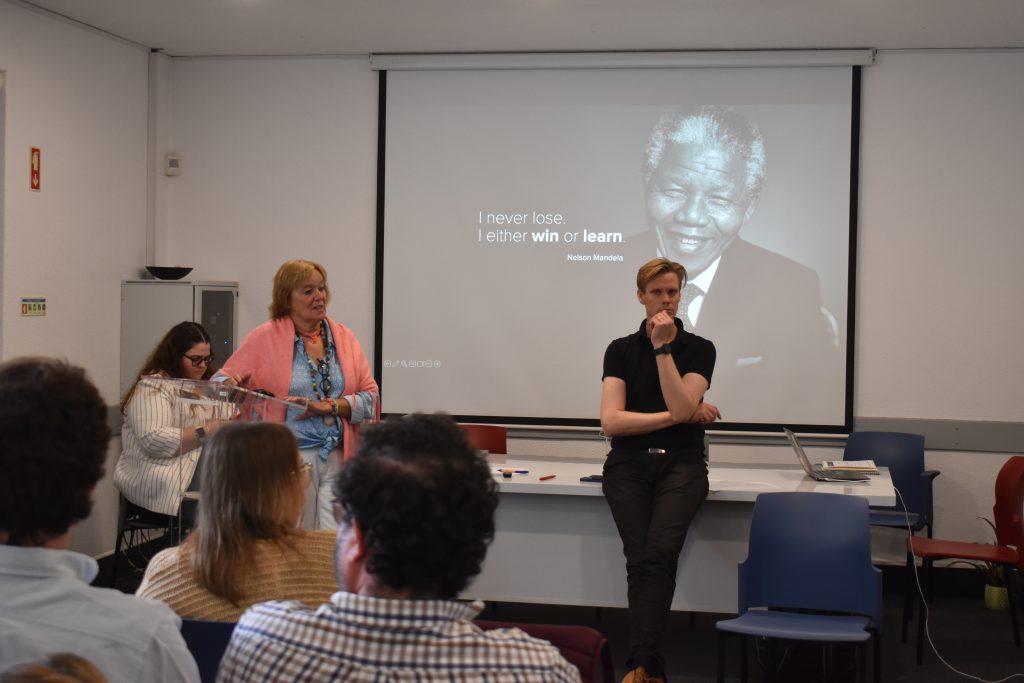
On October 29, the Demola Global Workshop, titled “Competence and Culture for Innovation and Future Society”, was held at ISPOT, IPSantarém. The event featured Ville Kairamo as a speaker and brought together professors, researchers, and entrepreneurs to discuss innovation and the future of society. The workshop was organized by the coordinators of the Digital Literacy and Social Inclusion Hub, Maria Potes Barbas and Filipe Madeira. Recording here